EOB EXAMPLE
What does an explanation of benefits look like? A worked example
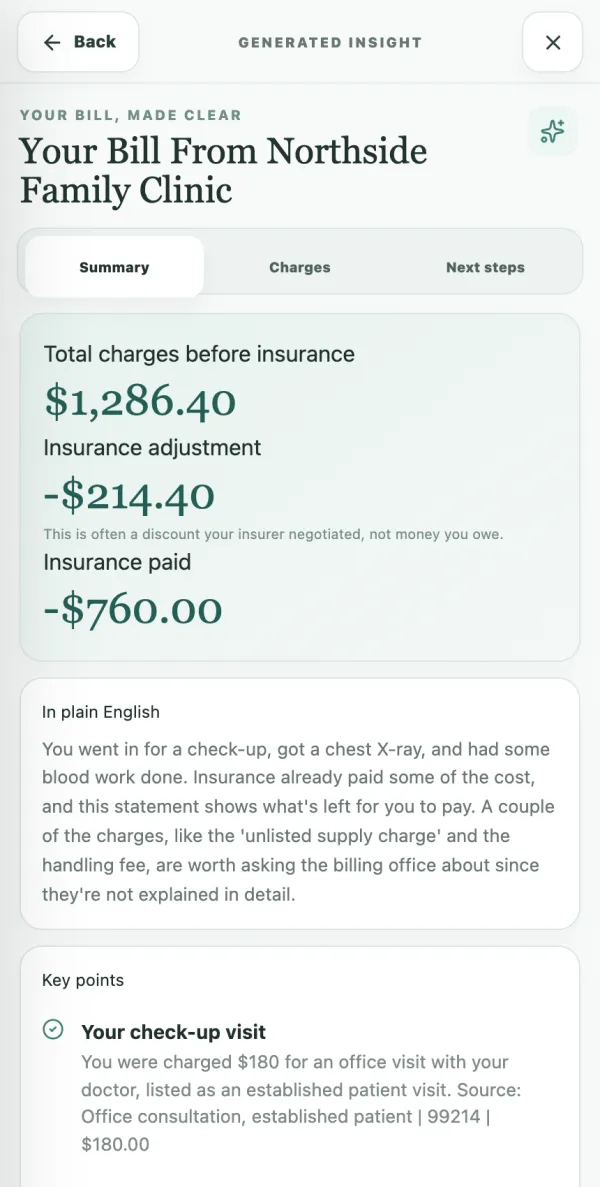
An explanation of benefits (EOB) is a statement from your insurer showing what a provider billed for a visit, the discount the plan negotiated, the allowed amount, what the plan paid, and what is left for you — split into deductible, copay and coinsurance. It is not a bill. The worked example below walks through one invented EOB line by line, so you can read yours the same way.
Why it’s confusing
Every insurer lays out its EOB differently and names the columns differently: “amount billed” or “provider charges”, “plan discount” or “network savings”, “your responsibility” or “what you owe”.
The numbers only make sense in a particular order. Read across a row out of order and the figures look random.
How to read it
Start at the top: the patient, the provider, the claim number and the date of service. Make sure it is your visit.
Then read one service row from left to right: billed → discount → allowed → plan paid → your share.
Your share is made of up to three parts. HealthCare.gov defines them: the deductible (what you pay before the plan starts paying), the copay (a fixed amount) and coinsurance (a percentage of the allowed amount).
Finally, check the remarks and the bottom line. Remark codes explain denials and adjustments, and the “patient responsibility” total is what the provider’s bill should ask you for — no more.
| On the document | Shows | In plain language |
|---|---|---|
| Amount billed | $420.00 | The provider’s full price. |
| Plan discount | −$185.00 | The in-network discount. You don’t pay this. |
| Allowed amount | $235.00 | The most the plan recognises for this service. |
| Plan paid | $164.00 | Sent to the provider. |
| Copay | $30.00 | Your fixed amount for the visit. |
| Coinsurance (20%) | $41.00 | 20% of the $205 left after the copay, in this invented plan. Plans set their own order. |
| Patient responsibility | $71.00 | Copay + coinsurance. Allowed $235 = plan $164 + you $71. |
The check that matters: the allowed amount equals what the plan paid plus what you owe. If the bill asks for more than $71, ask why.
What it does not mean
- That the EOB is a bill. Wait for the provider’s bill, then compare.
- That you owe the amount billed. You owe the patient responsibility.
- That a $0 plan payment means a denial. It often means the full allowed amount went to your deductible.
Where you’ll see it
- Mail or your insurer’s app after each claim is processed.
- Medicare Advantage and Part D plans send EOBs; Original Medicare sends a Medicare Summary Notice instead.
Questions worth asking
Ask your insurer
- Why was this amount applied to my deductible?
- What does this remark code mean?
- Was this processed as in-network?
Ask the provider
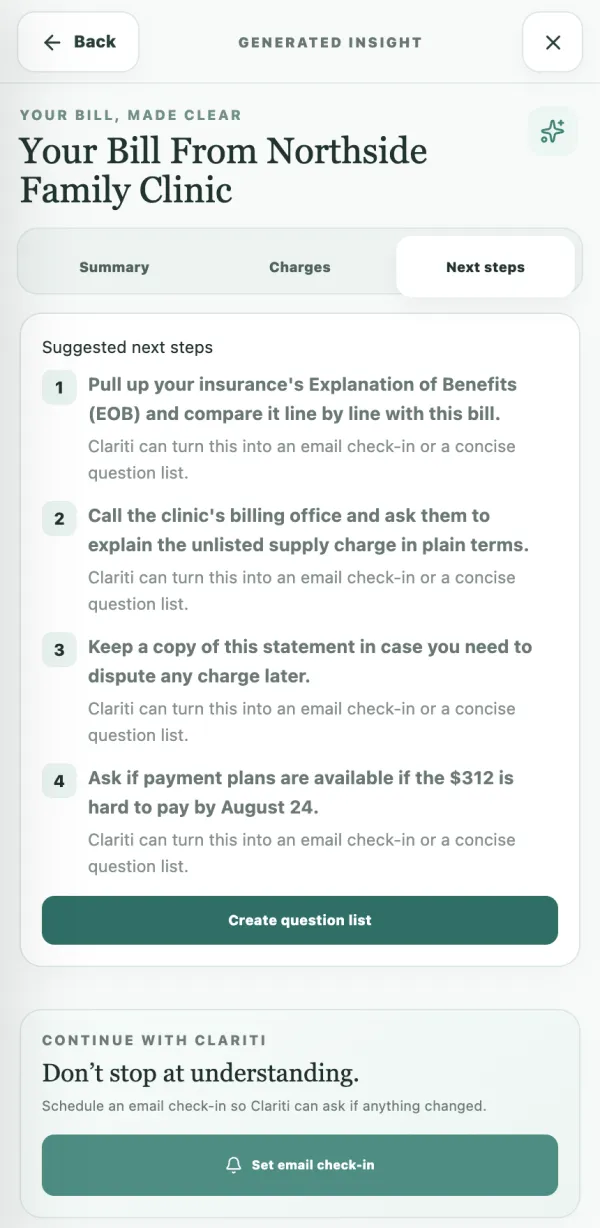
- Does my bill match the patient responsibility on my EOB?
- Have you applied the plan’s payment and discount?
Common questions
- Is an explanation of benefits a bill?
- No. It explains how the insurer processed a claim. The bill comes from the provider and should match the EOB’s patient responsibility.
- Why is the allowed amount lower than the amount billed?
- In-network providers agree to accept the plan’s allowed amount. The difference is written off, not passed to you.
- Where do I find my EOBs?
- Usually in your insurer’s app or website, as well as by post. Keep them until the matching bills are settled.