YEAR-END CHECKLIST
How to check a medical bill before you pay it (year-end checklist)
Before you pay, wait for your insurer’s explanation of benefits (EOB) and compare the two. CMS says your bill should not be higher than the patient balance on your EOB, and to talk to your provider if it is. Then check your details, the dates of service, duplicate lines and whether insurance was applied. At year end, also check which plan year the claim was counted in and whether FSA money can pay it.
Why it’s confusing
Bills and EOBs arrive separately, often weeks apart, and the bill usually comes with a due date that makes it feel urgent. Many people pay the first statement, which may have been printed before insurance finished processing the claim.
The end of the year adds pressure: a deductible that is about to start again, FSA money with a deadline, and bills from holiday visits. That is exactly when a five-minute check is worth it.
How to read it
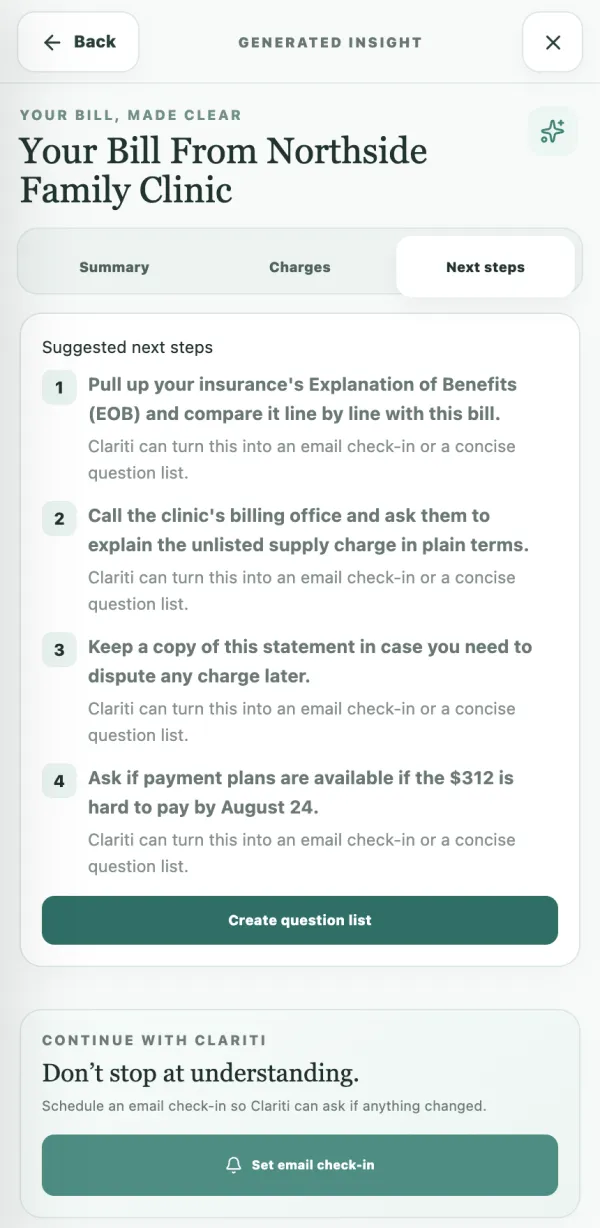
1. Wait for the EOB. It shows what the provider billed, what your plan allowed and paid, and what you may owe. The U.S. Department of Labor suggests checking your EOB for mistakes every time you get one.
2. Match the bill to the EOB. Same provider, same date of service, same amount due. CMS says your bill should not be higher than the patient balance on the EOB. If it is, talk to your provider.
3. Check your details. Your name, date of birth, insurance member ID and group number. If any of them is wrong, get that fixed before anything else.
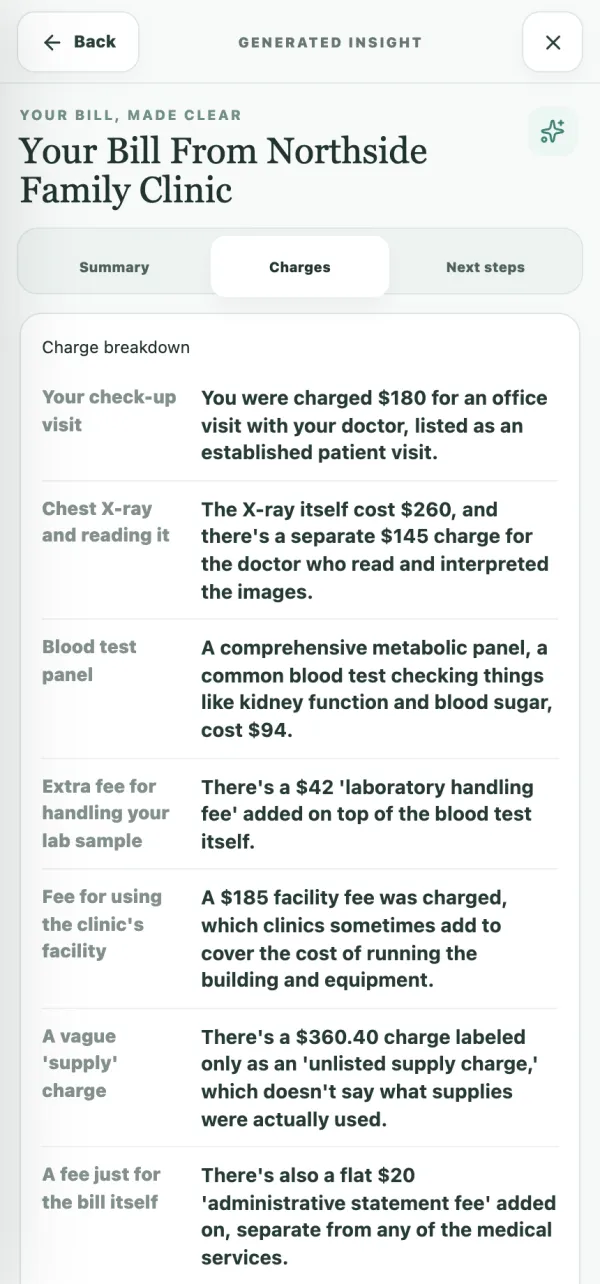
4. Ask for an itemized bill if you only have a summary. It lists each charge with a date, a description and usually a code.
5. Look for duplicates and strangers. The same charge twice on one date, a service you don’t recall, or a date you weren’t there.
6. Confirm insurance was applied. The bill should show an insurance payment or adjustment. If it shows none, ask whether the claim was filed.
7. Check the plan year. If the visit was near the end of your plan year, ask your plan which year’s deductible the claim was counted toward. Plans differ: check your plan documents.
8. Check your FSA dates. If you plan to pay with health FSA money, confirm the expense is eligible and that the date of service falls inside your plan’s dates.
9. If the bill is out of network for emergency care or care at an in-network hospital, read it against the No Surprises Act before you pay. The No Surprises Help Desk is on 1-800-985-3059.
10. Then pay, or ask. If something doesn’t match, call the billing office, ask them to hold the account while it is reviewed, and write down who you spoke to and when.
| On the document | Shows | In plain language |
|---|---|---|
| Bill: amount due | $412.00 | What the provider is asking you to pay. |
| EOB: patient balance | $187.00 | What your plan says you may owe after its payment and adjustment. |
| Difference | $225.00 | Ask the billing office. The bill may have been sent before insurance paid. |
| Bill: lab handling fee, listed twice | $18.00 × 2 | The same charge on the same date. Ask whether one is a duplicate. |
The EOB’s patient balance is the figure to compare against. A higher bill is a question to ask, not yet a mistake.
What it does not mean
- That a bill is wrong because it is higher than you expected. A new plan year or an unmet deductible can explain it.
- That an EOB is a bill. It usually says “this is not a bill”. You pay the provider, not the insurer.
- That you can ignore a bill you are questioning. Stay in touch with the billing office while it is reviewed.
- That this is legal or financial advice. It is general information to help you ask better questions.
Where you’ll see it
- Statements from doctors’ offices, clinics, labs, urgent care centers and hospitals.
- Patient portals, where a balance can appear before the EOB does.
- EOBs from your insurer, by mail or in the member portal.
Questions worth asking
Ask the provider’s billing office
- Has my insurance payment been applied to this balance?
- Please send me an itemized bill with a code for each charge.
- Why is this bill higher than the patient balance on my EOB?
- Can you hold my account while this is reviewed?
- Do you offer a payment plan or financial assistance?
Ask your health plan
- Has this claim finished processing, and what is my patient balance?
- Which plan year’s deductible was this claim counted toward?
- Was this provider in network on the date of service?
Common questions
- Should I pay a medical bill before I get the EOB?
- It is usually worth waiting. The EOB shows what your plan paid and what you may owe, and CMS says your bill should not be higher than the patient balance on it.
- What if my bill is higher than my EOB says I owe?
- CMS says to talk to your provider. If it is an out-of-network bill for emergency care or care at an in-network facility, you can also call the No Surprises Help Desk on 1-800-985-3059.
- How do I get an itemized bill?
- Call or write to the billing office and ask for an itemized bill with the code for each charge.
- Does it matter whether I pay in December or January?
- For your deductible, what matters is which plan year the claim was counted in, which your plan can tell you. For a health FSA, your plan’s dates matter. Plans differ: check your plan documents.