BILLING ERRORS
What are the most common medical billing errors?
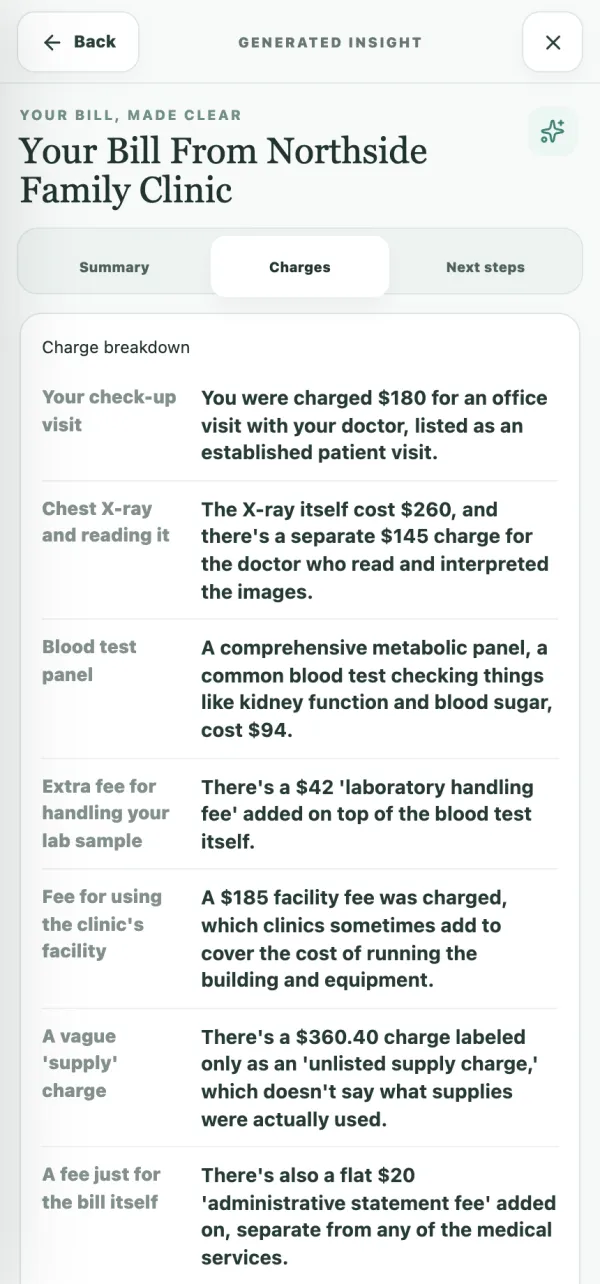
The most common medical billing errors are duplicate charges, services you didn’t receive, the wrong quantity, a visit coded at a higher level than the care documented (upcoding), one procedure split into separately billed parts (unbundling), wrong insurance or personal details, insurance payments not applied, and out-of-network charges that the No Surprises Act doesn’t allow. Most only show up on an itemized bill compared line by line with your EOB.
Why it’s confusing
A bill can be wrong without anyone being dishonest: charges are entered by different departments, codes are chosen from notes, and claims bounce between provider and insurer. Each hand-off is a chance for a slip.
The errors also look normal on the page. A duplicated lab test is just another line; an unapplied insurance payment just makes the balance bigger.
How to read it
Duplicates: the same code on the same date more than once. Sometimes correct (two of the same test), often not. Ask.
Not received or cancelled: tests, medicines or procedures you don’t remember, or that were cancelled. Ask for the record behind the charge.
Wrong quantity: 10 units where you had 1. Check the quantity column on the itemized bill.
Upcoding: a visit billed at a higher level than the visit you had — for example an office visit code for a longer, more complex visit. Ask how the level was chosen.
Unbundling: billing parts of one procedure separately when a single code covers them. CMS runs the National Correct Coding Initiative edits to catch this on Medicare claims.
Wrong details, unapplied payments, and surprise out-of-network charges: check your name, plan and member number; check that the EOB’s payment and adjustment appear; and check any out-of-network charge from an emergency or in-network facility against No Surprises Act rules.
What it does not mean
- That an error means fraud. Most are fixed with one call.
- That an unfamiliar code is an error. Look it up or ask before assuming.
- That a correct bill is affordable. If it’s right but too much, ask about payment plans and financial assistance.
Where you’ll see it
- Itemized hospital and clinic bills.
- EOBs where a claim was denied for wrong details.
- Statements that don’t subtract what the insurer paid.
Questions worth asking
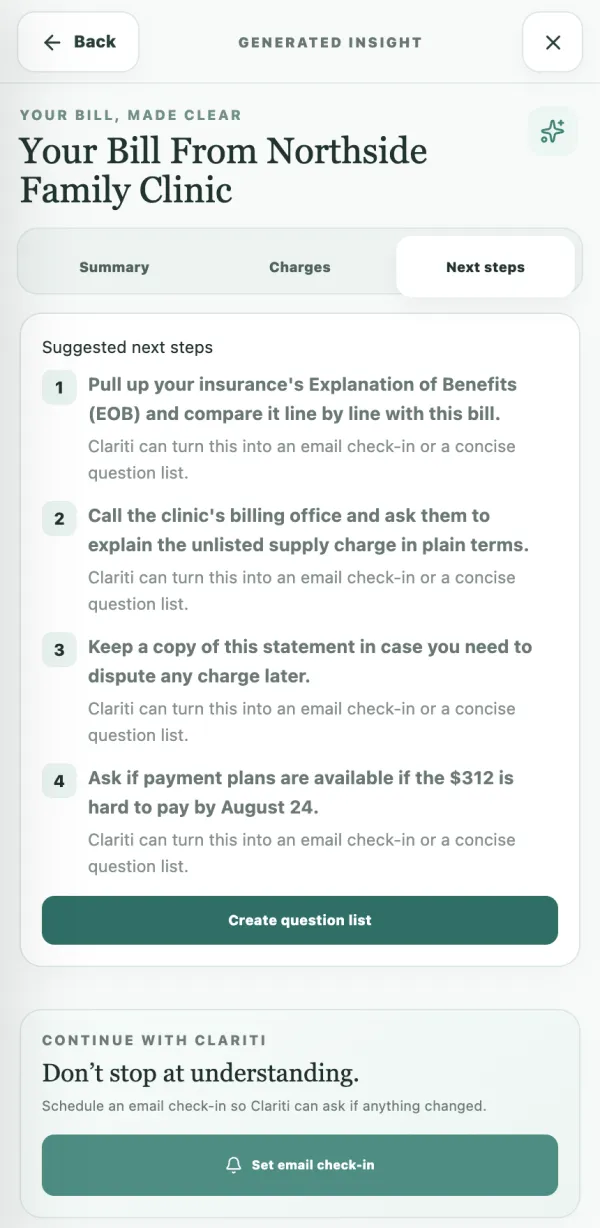
Ask the billing office
- Why does this code appear twice on the same date?
- Can you show me the record for this charge?
- How was this visit level chosen?
- Has my insurer’s payment and adjustment been applied?
Common questions
- How common are medical billing errors?
- Estimates vary widely and there is no single official figure. What is consistent is that errors are easiest to find on an itemized bill compared with your EOB.
- What is upcoding?
- Billing a service at a higher level or as a more expensive service than the one documented — for example a higher visit level than the visit supports.
- What is unbundling?
- Billing the parts of a procedure separately when one code covers the whole thing. CMS’s National Correct Coding Initiative edits are designed to catch it on Medicare claims.