DISPUTE A BILL
How do I dispute a medical bill?
To dispute a medical bill, ask for the itemized bill, compare every line with your insurer’s EOB, then call the provider’s billing office with the specific lines you’re questioning and ask for the account to be put on hold while they review. If that doesn’t fix it, escalate: an appeal to your insurer if the claim was processed wrongly, a No Surprises Act complaint for a surprise out-of-network bill, or the CMS dispute process if you were self-pay and the bill is $400+ over your good faith estimate.
Why it’s confusing
The first bill is usually a summary — a total and a few category lines — which gives you nothing specific to dispute. The itemized version is where errors become visible.
Two organisations are involved, and each will often tell you to call the other. Knowing whether the problem is the provider’s billing or the insurer’s processing decides who has to fix it.
How to read it
1. Get the itemized bill: every charge with its date, code and quantity. You can ask the billing office for it, and HHS says your billing records are part of the health information you have a right to access.
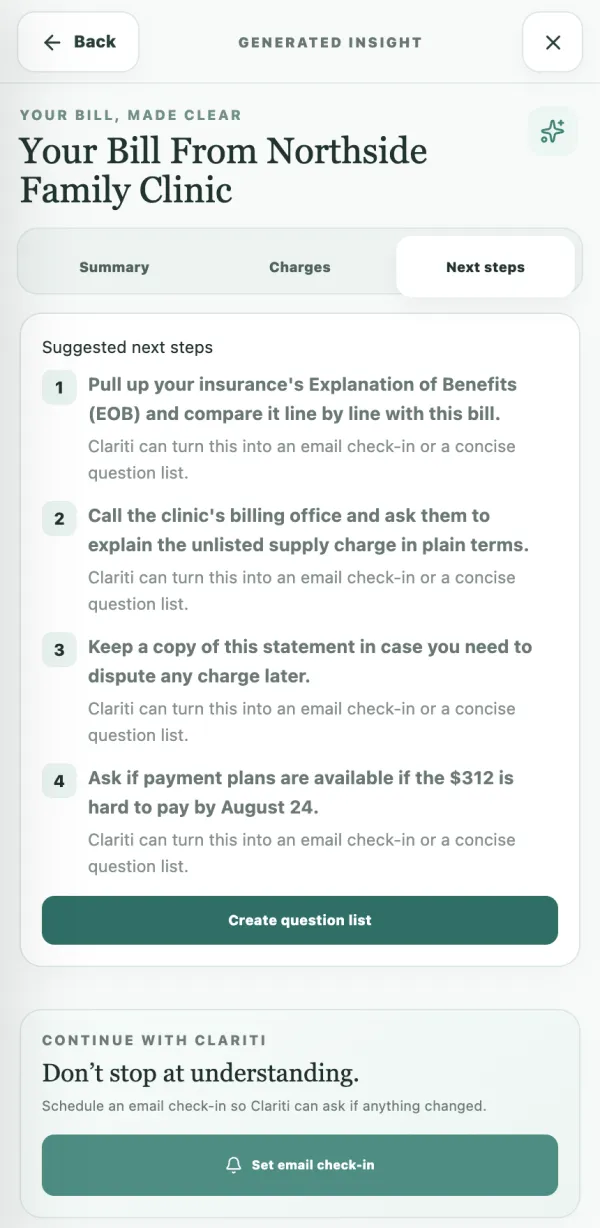
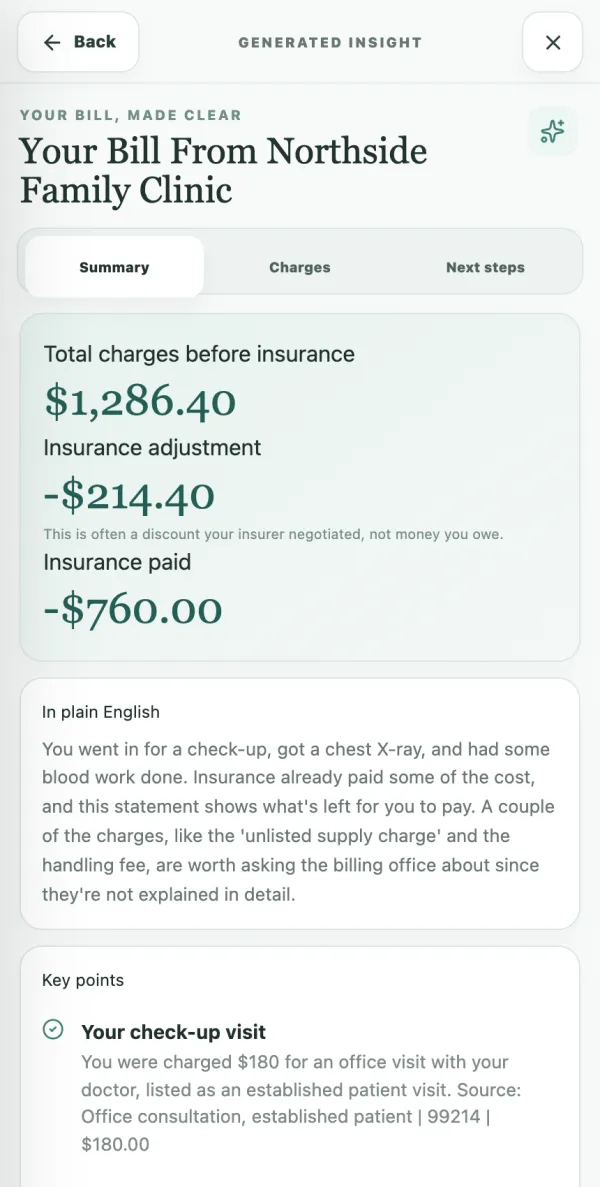
2. Match it to the EOB. The EOB says what the plan allowed, paid and left for you. If the bill asks for more than the EOB’s patient responsibility, or lists services the EOB doesn’t, that is your strongest point.
3. Call billing with specifics: the line, the date, what’s wrong and what you want. Ask for a hold on the account and a reference number. Follow up in writing — a short dispute letter — and keep copies.
4. Escalate to the right place. Claim processed wrongly: ask the insurer to reprocess, or file an internal appeal (generally within 180 days of the denial). Surprise out-of-network bill: the No Surprises help desk, 1-800-985-3059. Self-pay and $400+ over the good faith estimate: CMS’s patient-provider dispute process, for a bill dated in the last 120 days, with a $25 fee.
5. If the bill is right but unaffordable, that’s a different conversation: ask about a payment plan and the hospital’s financial assistance policy — the IRS requires tax-exempt hospitals to have a written one.
What it does not mean
- That you should ignore the bill while you dispute it. Tell the provider in writing, and ask them to pause collection.
- That a dispute is rude. Billing offices handle corrections every day.
- That you must pay first to dispute. You can dispute before paying; ask for the hold.
Where you’ll see it
- Bills that don’t match the EOB.
- Bills with charges for care you didn’t get, duplicates or unclear lines.
- Bills far above a good faith estimate.
Questions worth asking
Ask the billing office
- Can you send the itemized bill with codes and quantities?
- Can you put my account on hold while this is reviewed?
- Has my insurer’s payment and adjustment been applied?
Ask your insurer
- Was this claim processed correctly, in or out of network?
- How do I file an appeal, and by when?
Common questions
- Can I dispute a medical bill after paying it?
- Yes. If a charge was wrong, you can still ask for a correction and a refund. It’s easier before paying, so ask for a hold if you can.
- Is there a deadline to dispute a medical bill?
- It depends on the route. HealthCare.gov says insurance appeals are generally due within 180 days of the denial; CMS’s self-pay dispute needs a bill dated within the last 120 days. Provider billing offices set their own timelines, so act quickly.
- Should I dispute in writing?
- Call first to get the fastest fix, then confirm in writing — what you’re disputing, why and what you’re asking for — and keep a copy.