DISPUTE LETTER
How do I write a letter disputing a medical bill?
A good medical bill dispute letter is short and specific: your account number and dates of service, the exact lines you are disputing and why, what you want done (a correction, a reprocessed claim, an itemized bill), and a request to pause collection while it is reviewed. Attach copies — never originals — of the bill, your EOB and anything that backs you up.
Why it’s confusing
Phone calls fix many billing problems, but they leave no trace. A letter creates a dated record of what you disputed and when, which matters if the account later goes to collections.
Most templates online are long and legalistic. Billing staff respond faster to a clear one-page letter that names the lines and the fix.
How to read it
Start with the identifiers: patient name, account or statement number, dates of service and the provider’s name. Then one sentence: “I am disputing the following charges.”
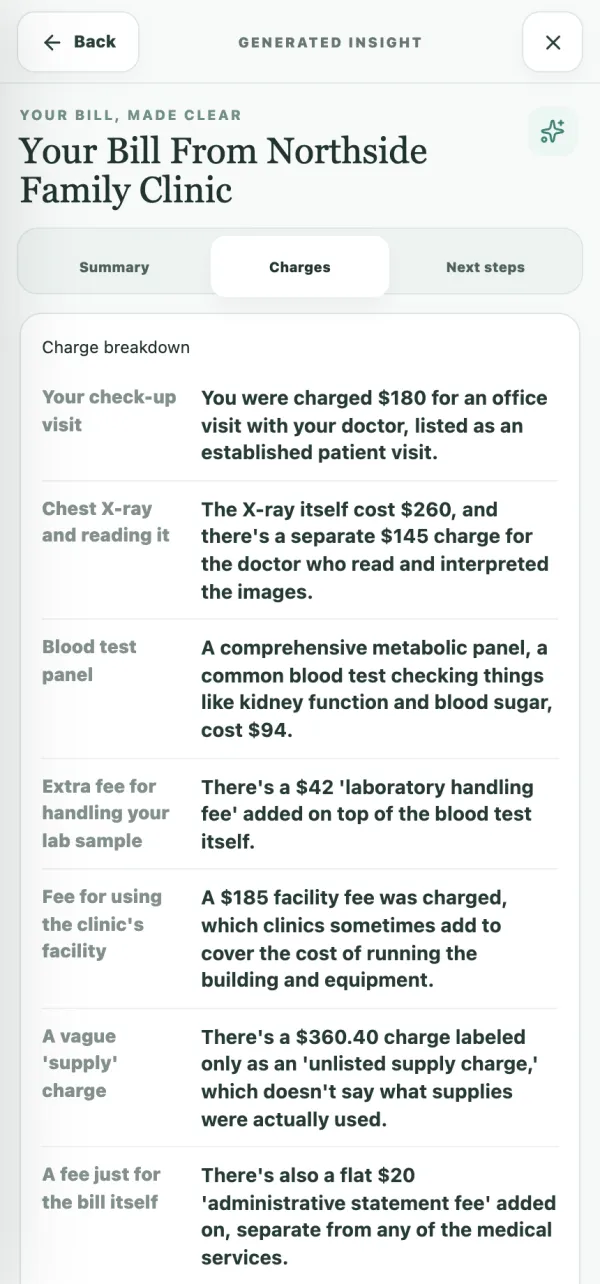
List each disputed line with its date, code (if shown) and amount, and the reason: not received, duplicated, more than my EOB says I owe, wrong quantity, should have been covered.
Say what you want: a corrected bill, the claim resubmitted to your insurer, an itemized statement, or the documentation behind a charge. Ask for the account to be placed on hold and not sent to collections during the review.
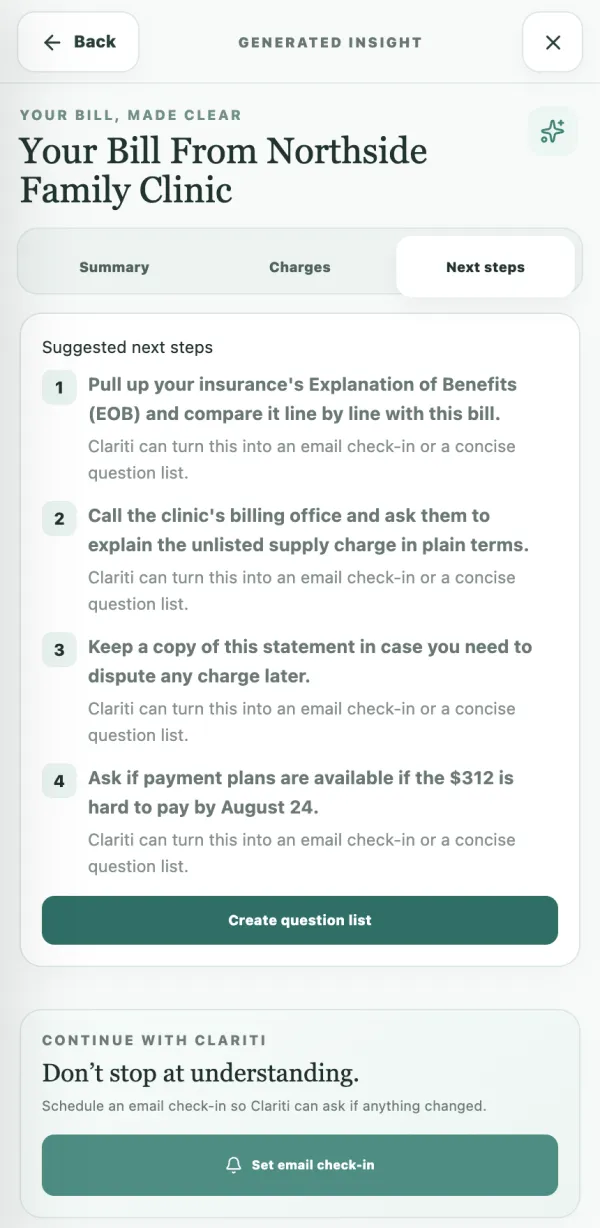
Send it the way the bill says disputes should be sent (some list a separate address), keep a copy, and note the date. If you call, write down who you spoke to.
| On the document | Shows | In plain language |
|---|---|---|
| Opening | Re: account [number], dates of service [dates] | Lets the billing office find your account at once. |
| Disputed line 1 | [date] 99214 office visit — $180.00 | “My EOB shows I owe $40 for this visit; the bill asks for $180.” |
| Disputed line 2 | [date] 99070 supplies — $360.40 | “Please tell me what supplies this covers and send the record behind it.” |
| Request | Correct, itemize, hold | “Please correct the bill, send an itemized statement and hold the account during review.” |
Name the line, the reason and the fix. Anything vaguer gets a vaguer reply.
What it does not mean
- That you need a lawyer to write it. A plain letter from you is normal.
- That sending it stops every deadline. Keep paying undisputed amounts and follow up if you hear nothing.
- That you should send originals. Keep them; send copies.
Where you’ll see it
- Billing office addresses on statements, sometimes a separate “billing inquiries” address.
- Patient portals with a message or dispute form.
Questions worth asking
Ask the billing office
- Where should written disputes go?
- Will the account be placed on hold while this is reviewed?
- When should I expect a reply?
Common questions
- Should I send a dispute letter by email or post?
- Use the method the provider lists for billing disputes. If you post it, keep a copy and proof of the date you sent it; if you use a portal message, save a screenshot.
- What should I attach to a medical bill dispute letter?
- Copies of the bill, the matching EOB, any good faith estimate, and anything showing the error, such as an appointment you cancelled.
- What if they don’t reply?
- Call, quote the date of your letter, and ask for a written answer. If the problem is with your insurer’s processing, use their appeal process; for surprise bills, the No Surprises help desk is 1-800-985-3059.